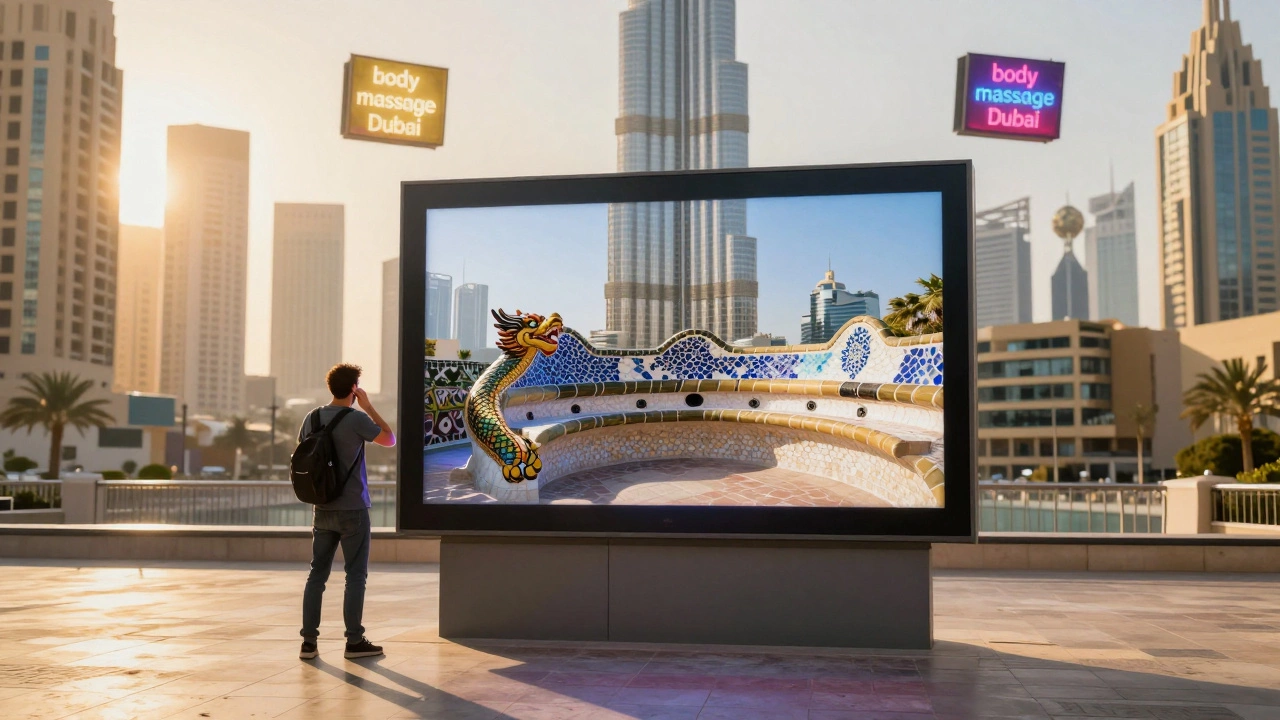
There’s a strange rumor floating around online that Park Güell - the colorful, mosaic-covered park in Barcelona designed by Antoni Gaudí - is somehow located in Dubai. Some even claim it’s a must-see attraction there, right next to the Burj Khalifa or Dubai Mall. That’s not just wrong. It’s physically impossible. Park Güell was built between 1900 and 1914 on Carmel Hill in northeastern Barcelona. It’s a UNESCO World Heritage Site. It has never been moved. It does not exist in Dubai. Anyone telling you otherwise is either misinformed or trying to redirect you somewhere else.
If you’re in Dubai and looking for relaxation, you might stumble across ads for body massage dubai services that use landmarks like Park Güell as bait. They’ll say things like, "Unwind like you’re in Gaudí’s dream garden." It’s a clever trick. But real relaxation doesn’t need fake geography. Real body massage dubai experiences happen in quiet villas, high-end spas, and licensed wellness centers - not in fabricated tourist fantasies.
Why Park Güell Can’t Be in Dubai
Antoni Gaudí spent his entire life in Catalonia, Spain. His work was deeply tied to the local culture, climate, and materials. The mosaics in Park Güell use broken ceramic tiles from nearby factories. The curves of the benches mimic the natural contours of the hillside. The ironwork reflects Catalan modernism. None of that exists in Dubai’s desert environment. Dubai doesn’t have the same stone quarries, the same artisan traditions, or the same historical context. You can’t transplant Gaudí’s genius like a potted plant.
Even if someone tried to copy Park Güell in Dubai, the result wouldn’t be the same. The light in Barcelona hits stone differently than it hits glass and steel in Dubai. The humidity, the wind patterns, the way people move through public space - all of it shapes how architecture feels. A replica would be a theme park version. Not art. Not history. Not worth your time.
What Dubai Actually Has That’s Worth Visiting
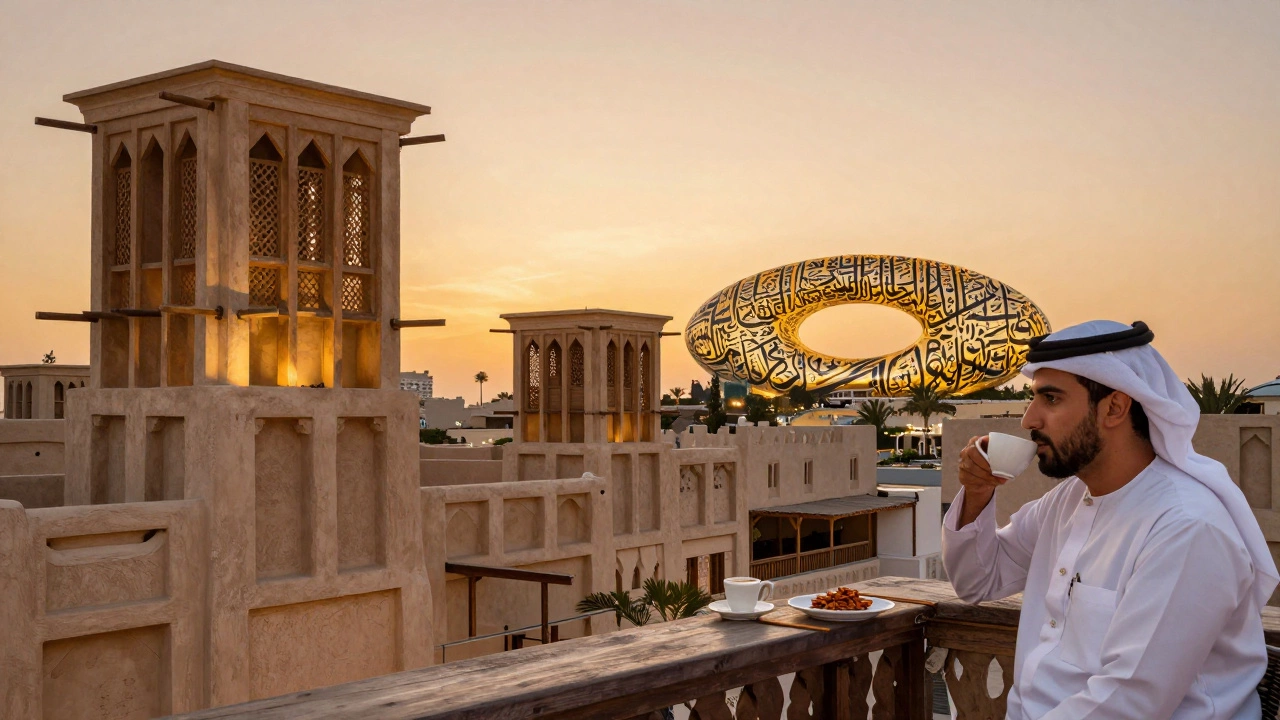
Dubai doesn’t need fake European parks. It has its own architectural wonders. The Museum of the Future is a glowing torus of Arabic calligraphy and futuristic design. The Al Fahidi Historical Neighborhood lets you walk through wind-tower houses built over 150 years ago. The Dubai Frame gives you a literal view of the old and new city side by side. These aren’t copies. They’re original responses to Dubai’s unique identity.
And then there’s the desert. No one builds a park to compete with the dunes of Liwa. At sunrise, the sand shifts color from gold to pink to deep orange. The silence is so complete you hear your own heartbeat. That’s the kind of awe Gaudí would have appreciated - nature as the true artist.
Why Do These False Claims Exist?
False claims about landmarks in Dubai aren’t accidents. They’re traffic traps. Websites and social media pages use famous names - Eiffel Tower, Statue of Liberty, Park Güell - to lure people searching for "things to do in Dubai." Once you click, they push you toward unrelated services: adult-oriented businesses, unlicensed tour operators, or sketchy booking sites.
These scams rely on one thing: people don’t know the difference between a real attraction and a made-up one. They trust what they see in a flashy ad. But if you take five minutes to check official tourism sites like dubaitourism.ae or the Dubai Culture portal, you’ll see Park Güell isn’t listed anywhere. Not even as a fake attraction.
How to Spot Fake Tourism Claims
Here’s how to tell if a tourist claim is real:
- Check the source. Is it the official Dubai Tourism website? A government portal? Or a random blog with no author name?
- Look for photos. Real places have consistent lighting, shadows, and angles across multiple photos. Fake ones reuse the same image from different locations.
- Search for reviews. Real sites have hundreds of reviews from real travelers. Fake ones have vague comments like "amazing experience!" with no details.
- Google Earth. Type in the exact address. If the location doesn’t show up, it doesn’t exist.
When you see "Park Güell in Dubai," you’re not being offered a sightseeing tour. You’re being funneled into a marketing funnel.
Real Wellness in Dubai
If you’re looking for a massage, Dubai has plenty of legitimate options. High-end resorts like the Armani Hotel or the Jumeirah Al Naseem offer world-class body treatments using oils from the region, traditional techniques from India and the Middle East, and certified therapists. Some places even include private hammam sessions or salt room therapy.
There are also licensed clinics in areas like Al Barsha, JLT, and Dubai Marina that specialize in therapeutic massage - not entertainment. These places list their licenses, therapist qualifications, and pricing openly. No hidden fees. No vague promises.
Some people search for specific types of massage, like lingam massage, which is a form of intimate bodywork rooted in tantric traditions. While this service exists in some private settings, it’s not advertised openly. It’s not part of mainstream wellness tourism. If you’re seeking it, do your research carefully. Understand the legal boundaries. Dubai has strict laws around personal services, and what’s legal in one country isn’t always legal here.
For those looking for more conventional relaxation, massage international city is a known hub for affordable, no-frills bodywork. It’s located in a busy industrial zone, far from tourist areas. Locals go there after long shifts. It’s not glamorous, but it’s clean, professional, and effective. You won’t find it on Instagram. But you’ll find it on Google Maps, with real reviews from people who’ve used it.

What to Do Instead
Stop searching for fake landmarks. Start exploring real ones. Here’s a short list of places you should visit in Dubai:
- Alserkal Avenue - an arts district with galleries, studios, and cafes in converted warehouses
- Dubai Creek - take an abra boat ride and watch the city’s history unfold along the water
- Jebel Jais - the highest mountain in the UAE, with hiking trails and sky bridges
- Qasr Al Watan - the presidential palace with stunning architecture and a library holding over 50,000 books
And if you want to relax? Book a session at a licensed spa. Ask for a therapist with experience in Swedish or Thai massage. Don’t trust ads that use Gaudí to sell you something. He didn’t design anything in Dubai. And you shouldn’t let someone else design your experience here, either.
Final Thought
Antoni Gaudí believed architecture should speak to the soul. He didn’t build things to impress tourists. He built them to reflect the land, the people, the spirit of a place. Dubai has its own soul. It doesn’t need to borrow someone else’s. The real beauty here isn’t in copycats. It’s in the way the desert meets the sea, the way light dances on glass towers, the way a quiet alley in Al Fahidi still smells like cardamom coffee from 1972.
Don’t chase ghosts. Go find what’s real.