There’s something quiet about hotel rooms that doesn’t get said enough. Not the plush towels or the minibar snacks, but the silence between check-in and checkout. The kind of silence that holds a hundred unspoken stories - the late-night crying, the whispered confessions, the quiet triumphs over loneliness. I’ve slept in more hotel rooms than I’ve had birthdays, and each one left a mark, not because of the view, but because of what happened inside it. I remember one in Dubai, just off Sheikh Zayed Road, where the AC hummed like a lullaby and the curtains never fully closed. Outside, the city glittered like a promise. Inside, I was just a body trying to rest. That’s when I thought about how hotel rooms are the last true private spaces left in a world that’s always watching. You don’t own them. You don’t even know the name of the person who cleaned them. But for a few hours, they’re yours. No questions asked.
Some people hire escort dubai services to fill the hollow spaces in these rooms. Not out of loneliness, exactly - more out of a need to feel seen, even if just for an hour. There’s a difference between companionship and transaction, and sometimes, in the dim glow of a hotel lamp, that line blurs into something softer. I’ve watched people arrive alone and leave with a smile they didn’t have before. It’s not romance. It’s not lust. It’s a temporary reset button pressed in a place where no one knows your name, your job, or your past.
The Architecture of Solitude
Hotel rooms are designed for transience. The furniture is bolted down. The mirrors are angled to show you your whole body, but never your face when you’re curled up on the bed. The TV is always on a loop of channels that don’t demand attention. The phone doesn’t ring unless you dial out. These aren’t accidents. They’re features. The room doesn’t ask you to be anything. It doesn’t judge you for wearing the same shirt for three days. It doesn’t care if you cry into the pillow or binge-watch reality TV until dawn. It just waits. It holds space.
Compare that to your own home. There, you’re expected to be functional. To clean up. To answer texts. To be a parent, a partner, an employee. But in a hotel room, you’re just a guest. A temporary resident of nowhere. That’s why people go there to break up. To propose. To write their first novel. To die. I once read a story about a man who spent his last night in a hotel in Bangkok, writing letters to people he’d never told he loved. He left them on the nightstand. Housekeeping found them. No one ever claimed them. But someone read them. And that mattered.
The Unseen Staff
The people who clean these rooms know more about you than your therapist. They see the half-empty bottles of wine. The crumpled tissues. The mismatched socks. The receipts from places you didn’t tell anyone you went to. They see the way you left the shower curtain pulled tight, like you were hiding from the world. They know if you slept in your clothes or just lay there staring at the ceiling. They don’t say anything. They don’t have to. Their silence is part of the service.
One housekeeper in Amsterdam told me, years ago, that she could tell if someone had been crying just by the way the pillow was pushed to the side. Not the damp spot - the angle. She said most people don’t cry hard. They cry in small, careful waves. Like they’re afraid of being heard. I thought about that the next time I checked into a room. I made sure to leave the pillow exactly how I’d slept on it. Not to hide anything. Just to say: I was here. And I was real.
Light and Shadow
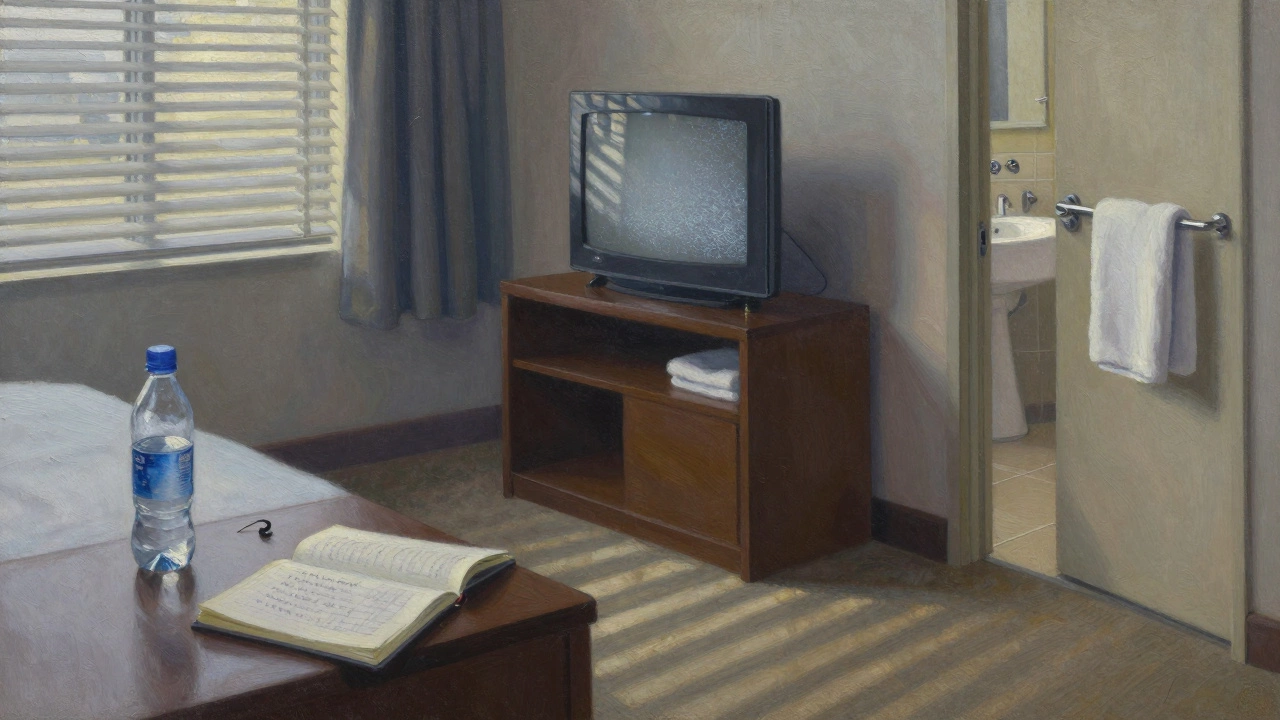
Hotel lighting is the most manipulated thing in the world. The bedside lamp is warm, but not too warm. The bathroom light is bright enough to see your pores, but not your scars. The overhead light? That’s the one that makes you feel like you’re on display. That’s why you never turn it on unless you have to. You learn to navigate by the glow of your phone screen, the faint light under the door, the streetlamp outside that flickers like a heartbeat.
There’s a reason so many movies use hotel rooms for climactic scenes. It’s because they’re the perfect stage for vulnerability. No props. No audience. Just you and the silence. I watched a woman in a hotel in Prague once - she sat on the edge of the bed, holding a photo of a child. She didn’t cry. She just stared. For twenty minutes. Then she folded the photo, put it in her purse, and walked out. I never saw her again. But I still think about her. Who was she? Why was she alone? Did she get what she came for? I’ll never know. And that’s the point.
What You Leave Behind
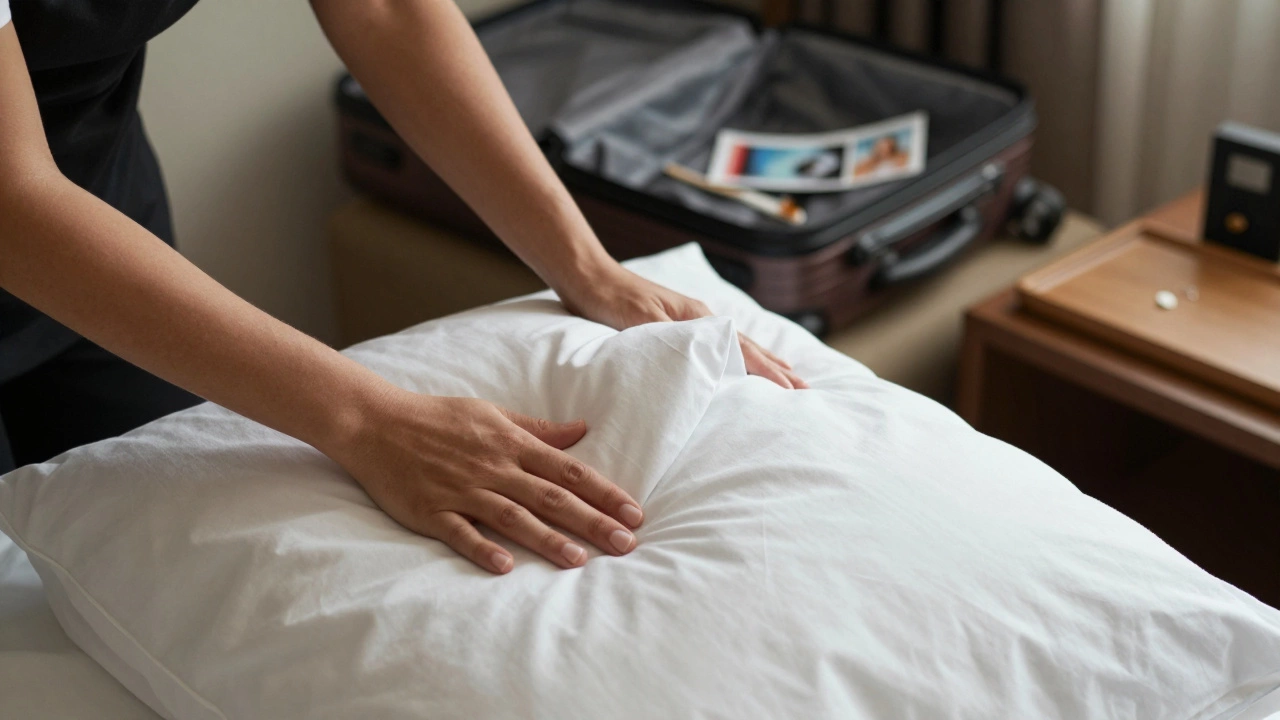
People leave things in hotel rooms. Not just socks or chargers. They leave pieces of themselves. A journal with half-written poems. A wedding ring tucked under the mattress. A playlist on a forgotten phone. I once found a single earring in the bathtub of a room in Lisbon. Gold. Simple. No engraving. I didn’t take it. I left it where I found it. I figured if it mattered enough to be lost, it would be found again. Or maybe it didn’t matter at all. Maybe it was just a thing. But the thought of it - that someone had worn it, lost it, maybe even cried over it - that stayed with me.
There’s a hotel in Tokyo that keeps a box of lost items. It’s called the Memory Box. Guests can come back and claim things they left behind. Some never return. The staff keep the items for a year. Then they donate them. Not to charity. To other travelers. So someone else can find comfort in something lost by someone else. That’s the quiet magic of hotel rooms. They don’t erase your presence. They pass it on.
The Last Room
I’m not sure when I stopped seeing hotel rooms as temporary. Maybe it was the third time I woke up in one and didn’t know what day it was. Maybe it was the time I ordered room service just to hear a human voice. Or maybe it was when I realized I’d packed the same toothbrush for seven years - because I never trusted the ones they gave me.
Now, when I check in, I don’t just look for the view. I look for the silence. The kind that doesn’t rush you. The kind that lets you breathe without explaining why. I’ve stayed in five-star suites and motels with flickering bulbs. They all feel the same. They all hold you. Even if just for a night.
There’s a kind of dignity in being alone in a place where no one knows your name. You don’t have to perform. You don’t have to explain. You can be messy. You can be tired. You can be broken. And it’s okay. Because tomorrow, you’ll leave. And the room will reset. And someone else will come in. And they’ll find the same silence. And maybe, just maybe, they’ll find a little peace in it too.
That’s why I write odes to hotel rooms. Not because they’re beautiful. But because they’re honest. They don’t pretend to be anything more than what they are: a space between who you were, and who you’re becoming.
One night, in a hotel in Bangkok, I wrote a note on the notepad by the phone: "I’m not lost. I’m just between places." I left it there. I don’t know if anyone found it. But I like to think they did. And maybe, just maybe, it helped someone else feel less alone.
That’s the thing about hotel rooms. They don’t fix you. But they let you be. And sometimes, that’s enough.
Some nights, the silence isn’t empty. It’s full. Of everything you didn’t say. Of everyone you miss. Of all the versions of yourself you left behind. And for a few hours, that’s all you need.
That’s why I keep coming back. Not for the bed. Not for the view. But for the quiet.
And sometimes, when the lights are off and the city outside is still, I whisper to the room: "Thank you for holding me."
And the room never answers. But it never lets go either.
There’s a reason people call them "rooms" and not "places." Rooms hold things. They don’t define them. And that’s the most generous thing any space can do.
That’s why I’ll keep writing odes to them. Even if no one else reads them.
Because someone out there is sitting in one right now. And they need to know: you’re not alone. Even if you’re the only one in the room.
And if you need to call someone? You can. But you don’t have to.
Just breathe.
They’ll be here when you’re ready.